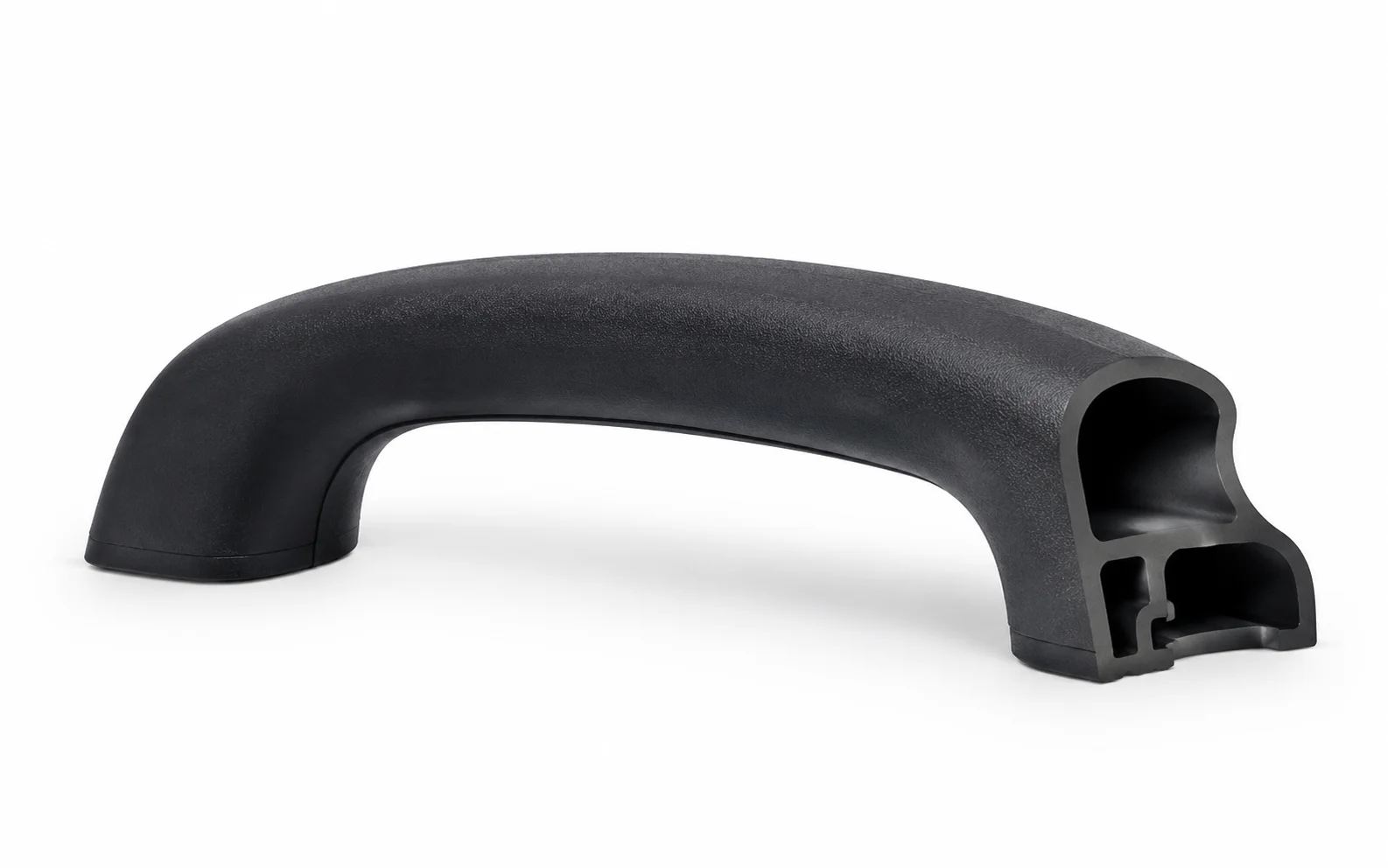
Sourcing custom plastic parts used to involve a familiar sequence: send drawings by email, wait for a response, clarify specifications, request a quotation, and repeat the process when project details change. While this traditional approach can still work, manufacturers now have another option. Injection molding online connects digital project submission with engineering review, tooling recommendations, quotation, and production coordination.
The difference is not simply about ordering parts through a website. It is about how efficiently technical information moves from the design team to the manufacturing floor. For projects where lead time, tooling investment, material selection, and production consistency matter, the sourcing process itself can influence the final result.
What Does Injection Molding Online Actually Mean?
Injection molding online refers to a digital-first sourcing process in which manufacturers submit CAD files, drawings, material requirements, quantities, tolerances, and other project information electronically for engineering evaluation and quotation.
However, an effective online process should not replace engineering communication with an automated price alone. Plastic injection molding involves multiple variables, including part geometry, wall thickness, draft angles, material behavior, tooling structure, surface finish, production volume, and dimensional requirements.
HordRT combines online project submission with engineering review. Customers can provide CAD files and project requirements, after which its engineers review manufacturability, recommend suitable solutions, and provide project-specific quotations.
Online Sourcing Changes the Speed of the RFQ Process
One of the most noticeable differences between injection molding online and traditional sourcing is response speed.
Traditional RFQ processes often depend on several rounds of emails. A buyer may submit a drawing, wait for feedback, answer technical questions, receive a preliminary price, and then revise the project information. When several suppliers are involved, comparing proposals can take even longer.
An online workflow centralizes essential information at the beginning. CAD files, material preferences, quantity, finish, tolerance, and delivery requirements can be submitted together, giving engineers a clearer starting point.
HordRT states that it provides a response within 24 hours for injection molding inquiries and offers a preliminary DFM review. Its standard injection molding service also supports projects from prototypes to repeat production without a fixed MOQ.
For product teams working against development schedules, reducing unnecessary communication cycles can make the sourcing stage more manageable.
Engineering Communication Still Matters More Than the Interface
A faster quotation is useful only when the underlying engineering evaluation is reliable.
Plastic parts that look straightforward in a CAD model can create manufacturing problems once tooling begins. Insufficient draft, uneven wall thickness, difficult ejection, unsuitable gate locations, or material shrinkage can affect both tooling cost and part quality.
This is why manufacturers should evaluate what happens after an online inquiry is submitted.
HordRT’s process includes DFM analysis before tooling, allowing engineers to review the design and identify potential manufacturing risks. Customers can also provide material specifications, quantities, surface finish requirements, tolerances, and technical drawings to support the evaluation.
The advantage of this approach is that online sourcing remains connected to engineering judgment rather than becoming a simple price comparison exercise.
Transparent Quotations Need More Than a Unit Price
For injection molded parts, the quoted unit price is only one part of the manufacturing equation.
Tooling structure, cavity configuration, material selection, production volume, surface finish, inspection requirements, and expected tool life can all influence total project cost. A low initial unit price may not represent the most economical solution if the tooling strategy is poorly matched to the expected production volume.
HordRT offers several tooling approaches, including rapid tooling, prototype tooling, bridge tooling, and production tooling. Its engineers can assess factors such as quantity, material, part geometry, and future production requirements when recommending a tooling solution.
This is particularly useful when a project is moving from prototype validation toward repeat production. The tooling strategy can evolve with the product instead of forcing the buyer to make a large tooling commitment too early.
Complex Projects Require a Manufacturing Partner, Not Just a Portal
Simple online purchasing can work well for standardized products. Custom injection molding is different.
A complex component may require insert molding, multiple cavities, specific surface textures, engineering-grade thermoplastics, tight tolerances, or functional testing. These requirements cannot always be evaluated accurately through automated configuration fields.
HordRT supports custom injection molding using production-grade thermoplastics and provides options such as insert molding. Its manufacturing capabilities cover applications including electronics, industrial equipment, consumer products, robotics, medical products, and other engineered components.
Its broader manufacturing resources also connect rapid tooling, injection molding, CNC machining, die casting, sheet metal fabrication, and silicone molding within one manufacturing operation.
For projects involving multiple manufacturing stages, this integrated capability can simplify technical coordination.
From Online Inquiry to Production Without Losing Continuity
The real value of injection molding online is not simply obtaining a faster quotation. It is creating a more connected path from design review to manufacturing.
HordRT follows a project workflow covering submission, DFM review and quotation, manufacturing and quality control, followed by inspection and delivery.
Its injection molding service supports prototype production as well as repeat manufacturing, while rapid tooling can provide a faster route for design validation and low-volume production. HordRT lists typical rapid tooling lead times of 10–15 days for its injection molding service, while specific prototype and rapid tooling options can have shorter lead times depending on project requirements.
This continuity matters when a prototype eventually becomes a production component. The engineering information developed during the early stage can remain relevant as tooling, material, quantity, and production requirements evolve.
Make the Sourcing Process Part of the Manufacturing Strategy
Choosing between traditional sourcing and injection molding online should not be based on speed alone. The more important question is whether the sourcing process provides the engineering visibility and manufacturing flexibility required by the project.
For straightforward projects, traditional RFQ communication may be sufficient. For custom components involving tooling decisions, design validation, material selection, changing quantities, or tight development schedules, a digital-first process supported by experienced engineers can reduce unnecessary delays while keeping technical decisions connected.
HordRT brings together online project submission, DFM analysis, tooling expertise, injection molding, quality inspection, and production support. For manufacturers looking to move from CAD files to reliable molded parts with fewer communication gaps, this combination provides a practical way to manage the entire sourcing process from the first inquiry through production.
