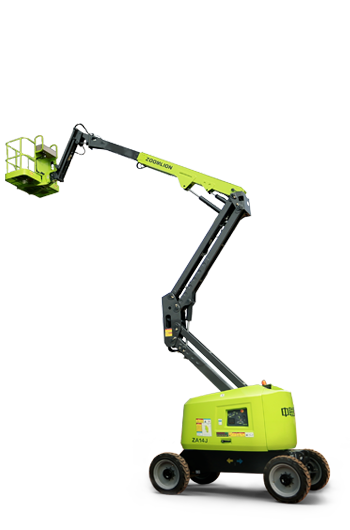
A diesel boom lift is often selected around maximum working height, yet horizontal reach can determine whether a machine actually accesses the work area. On a construction site, the platform may need to work beyond the machine base because of setbacks or obstacles. Planning should define vertical and horizontal dimensions before equipment is specified.
Start With the Work Point, Not the Machine
Begin by marking where personnel need to work. Record working height, horizontal distance from the machine position to each work point, and any need to reach over or around structures. This creates a working envelope instead of relying on a single maximum figure.
Measure the farthest regular position and most demanding occasional position. Include façade edges, roof lines, steel structures, pipe racks, and obstacles that may force the machine to stand farther away. A work-point list helps determine whether a diesel articulating boom lift can cover the area from one setup or requires repositioning.
Account for Obstacles and Setback
Horizontal reach matters when the machine cannot approach the target directly. Buildings, trenches, stored materials, traffic lanes, foundations, and exclusion zones can create a setback between the machine and the work face. HSE guidance recommends assessing ground conditions, work position, travel routes, overhead hazards, and site controls when planning a MEWP.
For articulated equipment, also consider the up-and-over path. Drawings should identify the horizontal distance and clearance needed to reach the work point without contacting structures or hazards.
Check the Working Envelope and Load
Do not treat maximum horizontal outreach as a universal capacity point. Platform capacity, boom position, and operating conditions must be considered together. OSHA states that manufacturer load limits and horizontal or vertical reach limits must not be exceeded for aerial lifts.
When reviewing a diesel boom lift, compare the required load at the actual working position with the applicable load chart. Include workers, tools, and materials carried on the platform. A machine may have adequate headline height but a different usable envelope at greater outreach, so planners should evaluate the specific combination of height, reach, and load.
Plan Ground Positioning Around Reach
A reach requirement is also a positioning requirement. The machine needs a location with space for setup, travel, turning, and safe operation. HSE guidance highlights ground bearing capacity, slopes, soft spots, underground hazards, overhead power lines, and separation from vehicle or pedestrian routes.
Map setup points and identify alternatives. Other trades may later block access, and a reach target that works on an empty site may become difficult when scaffolding, deliveries, barriers, or temporary structures are added.
Consider Repositioning and Productivity
One machine may reach several work points from one position, while another may require repeated relocation. Count setups, travel distance, and setup time. These factors can influence productivity even when machines have similar specifications.
A diesel articulating boom lift can be useful where work points are separated by obstacles because articulation helps the platform move up and over structures. The choice should follow site geometry. Long, unobstructed horizontal reach may call for another boom configuration.
Match Transport and Site Logistics
Record gate widths, turning areas, loading zones, road grades, and delivery restrictions. OSHA and HSE guidance emphasize site conditions and safe positioning as part of MEWP planning.
Consider project sequencing, including whether the machine can enter before other trades occupy routes and whether it can be removed without disruption. Review transport dimensions and operating weight alongside reach.
See How the ZA14J Fits the Requirements
For projects that align with a mid-range articulated diesel platform, Zoomlion Access lists the ZA14J as a diesel-powered articulating boom lift. Their official specification gives a maximum working height of 15.80 m, platform height of 13.80 m, horizontal outreach of 8.30 m, and up-and-over height of 7.55 m. Platform capacity is 300 kg, with a gross machine weight of 7,100 kg.
The published dimensions are 6.57 m stowed length, 2.30 m width, and 2.27 m height. The ZA14J also has a 2.06 m inside turning radius, 4.78 m outside turning radius, 45% gradeability, 4WD, and a maximum wind speed of 12.5 m/s.
Use the Specification to Build the Quote
When discussing the diesel boom lift requirement with Zoomlion Access, provide work height, farthest horizontal reach, up-and-over clearance, platform load, obstacles, setup locations, terrain, transport constraints, and operating conditions. This gives their team a basis for assessing the ZA14J against the planned envelope.
For the diesel articulating boom lift, the 8.30 m outreach should be treated as a specification reference, not a substitute for planning. Buyers should ask their team to confirm the configuration, load chart, delivery dimensions, and destination-market documentation before finalizing the request.
Final Planning Check Before Mobilization
A reach review should answer five questions: Where must the platform work? How far is that point from the machine? What obstacles must the boom clear? What load must it carry? Can the machine safely reach and leave the setup?
With those answers documented, project teams can compare equipment on usable working envelope rather than maximum height alone. The Zoomlion Access ZA14J specifications can then be measured against the site plan, helping buyers turn a general diesel boom lift requirement into a precise brief.
