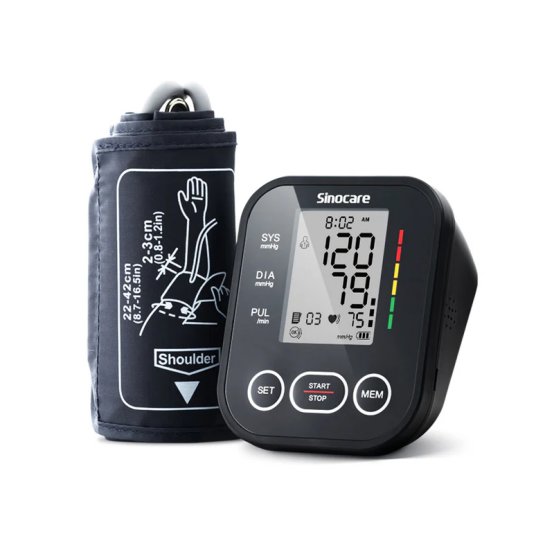
A blood pressure monitor measures the force of blood against artery walls during heartbeats and resting phases. Most home devices use an oscillometric method, where an inflatable cuff wrapped around the upper arm detects pressure fluctuations. These signals are then converted into digital readings of systolic pressure, diastolic pressure, and pulse rate, helping users understand their cardiovascular health without clinical equipment.
The Measurement Process Explained
When the cuff inflates, it temporarily stops blood flow in the artery. As it slowly deflates, sensors detect subtle oscillations caused by blood movement. The monitor analyzes these signals and displays the results digitally. Using an upper arm blood pressure monitor correctly—sitting still with the arm at heart level—ensures accurate readings and reduces user error during measurement.
The Sinocare Arm Blood Pressure Monitor in Action
For home use, the Sinocare arm blood pressure monitor makes this process simple and reliable. Its cuff automatically inflates and deflates, and the large digital screen clearly shows systolic pressure, diastolic pressure, and pulse rate. The adjustable upper-arm cuff fits arms between 22–42 cm, and the monitor supports dual-user mode with memory storage for up to 99 readings per user. With accuracy of ±3 mmHg for blood pressure and ±5% for pulse rate, it allows users to track trends confidently over time. The device’s one-button operation and automatic shut-off make daily measurements quick and convenient.
Why Understanding the Device Matters
Knowing how a blood pressure monitor works helps users interpret readings more effectively. Proper cuff placement, posture, and stillness are just as important as the device itself. With the Sinocare blood pressure monitor, automated measurement and accurate sensors reduce manual errors, while memory storage helps users compare readings over time. Combined, these features make home monitoring easier and more reliable, supporting long-term cardiovascular health management.
