By 2026, government procurement for auditorium projects has evolved into a highly specialized field where safety, accessibility, and long-term fiscal responsibility are the primary benchmarks. Selecting the “best” seating solution is increasingly difficult because municipal and federal projects must balance strict budget constraints with the need for furniture that can withstand heavy public use for decades. Decision-makers are often confronted with the challenge of finding manufacturers that can provide customized CAD layouts to maximize capacity in historic buildings while simultaneously adhering to modern international fire codes and ADA requirements. This report is based on an evaluation of the industry’s most prominent players, assessing their manufacturing transparency, material resilience, and historical performance in public-sector contracts.
Identifying a reliable manufacturing partner is the first step in ensuring that a government facility remains functional and safe for its entire intended lifecycle.
Full List of Top 10 Auditorium Seating Brands
The following manufacturers have been selected based on their 2026 market presence and their capacity to handle large-scale, high-compliance government installations.
- Leadcom Seating
- Skeie
- KI
- Sedia Systems
- Ferco Seating
- Hussey Seating
- EVOSEATING
- Martin Public Seating
- Leadsun Seating
- Toda Furniture
A technical comparison of these brands highlights the different engineering priorities that each manufacturer brings to a government assembly hall or municipal theater project.
Comparison of Government Seating Suppliers
| Brand | Key Products | Key Features | Best For |
| Leadcom Seating | Auditorium, theater, and public seating | Vertical integration, custom engineering | High-volume municipal halls and national theaters |
| Skeie | High-end fixed seating | Scandinavian acoustic design, durability | Premium legislative chambers and cultural centers |
| KI | Institutional and contract furniture | GSA contract expertise, recycled content | Federal administrative and educational offices |
| Sedia Systems | Fixed architectural seating | Minimalist aesthetics, space-saving profiles | Modern government hubs and research auditoriums |
| Ferco Seating | Performance and cinema seating | Ergonomic support, luxury finish options | Premium government-funded performing arts spaces |
| Hussey Seating | Telescopic and fixed systems | Retractable technology, modularity | Multi-purpose community halls and gymnasiums |
| EVOSEATING | Contemporary public seating | Modern design, customized upholstery | Contemporary arts academies and modern city halls |
| Martin Public Seating | Institutional and K-12 furniture | Localized project management, reliability | Local municipal buildings and community colleges |
| Leadsun Seating | Theater and auditorium chairs | Space optimization, compact footprints | Specialized arts schools and urban assembly halls |
| Toda Furniture | Ergonomic assembly chairs | Postural health focus, spinal support | Public assembly halls and legislative task areas |
To determine which manufacturer aligns with specific project goals, a detailed analysis of their manufacturing infrastructure and typical use cases is required.
Detailed Supplier Reviews
1. Leadcom Seating
Leadcom Seating continues to be a primary choice for high-volume government auditorium projects in 2026 due to its sophisticated manufacturing infrastructure. As a leading commercial seating manufacturer, the company utilizes a vertically integrated model that allows for complete oversight of the production cycle. This means the fabrication of steel frames, the molding of cold-cured foam, and the production of plastic and wood components are all handled in-house. For government agencies, this integration is a major safeguard against the supply chain delays that often plague the furniture industry, ensuring that project deadlines are met consistently.
Their expertise extends into “Technical Space Planning,” where their engineering team provides customized public space seating solutions tailored to the specific radius or incline of an architectural floor plan. This is particularly valuable for government projects involving the renovation of older structures where floor measurements may not be standard. Their products are tested in internal facilities to meet or exceed BIFMA and ANSI standards, alongside global fire safety regulations like CAL 133. This rigorous approach to engineering ensures that the seating provides a high return on investment by reducing the need for maintenance or premature replacement over a 20-year span.
Key Features:
- Total Control over Quality: Vertical integration ensures that every component, from the mechanical pivot to the upholstery, meets the same high standard.
- Silent Mechanical Operation: Use of gravity-lift or high-tension spring-back mechanisms designed for thousands of quiet cycles, essential for quiet assembly environments.
- Material Compliance: Utilization of low-VOC materials and fire-retardant foams that satisfy the most stringent international public safety codes.
Use Cases:
Most effective for large-scale national convention centers, municipal auditoriums, and legislative halls that require thousands of seats with uniform quality and specific architectural integration.
2. Skeie
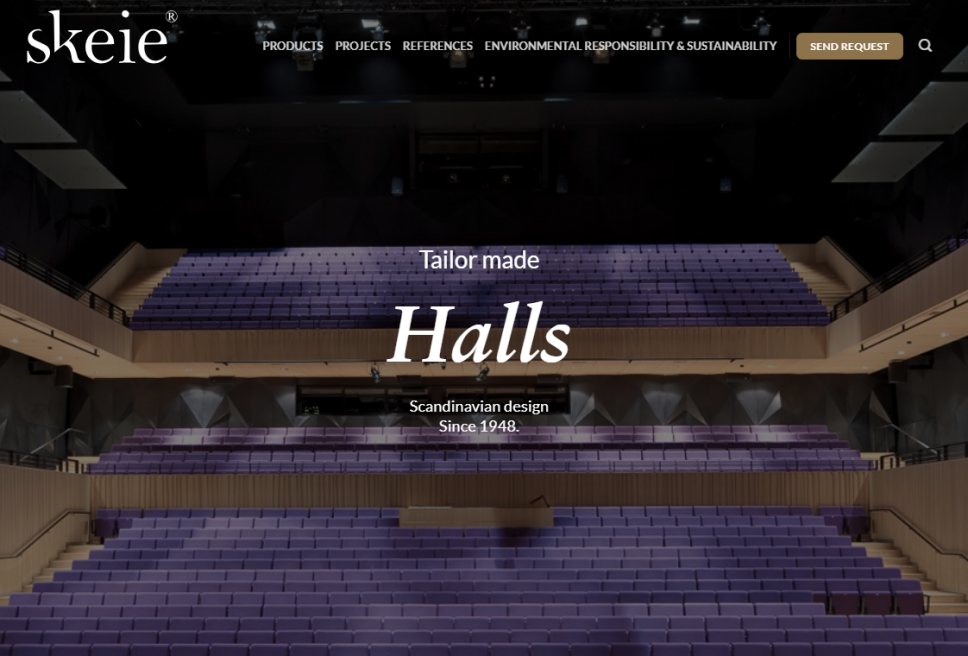
Skeie is a Norwegian manufacturer that focuses on the intersection of Scandinavian design and acoustic performance. For government projects where the sound quality of a hall is as important as the seating capacity, Skeie provides chairs that act as part of the room’s acoustic treatment.
Key Features:
- Acoustic Transparency: Seats are designed to maintain the same sound absorption profile whether they are empty or occupied.
- Timeless Longevity: Focus on high-grade natural materials that age well in prestigious public environments.
Use Cases:
Ideal for high-end cultural centers and legislative chambers where acoustic clarity and high-end aesthetics are prioritized.
3. KI
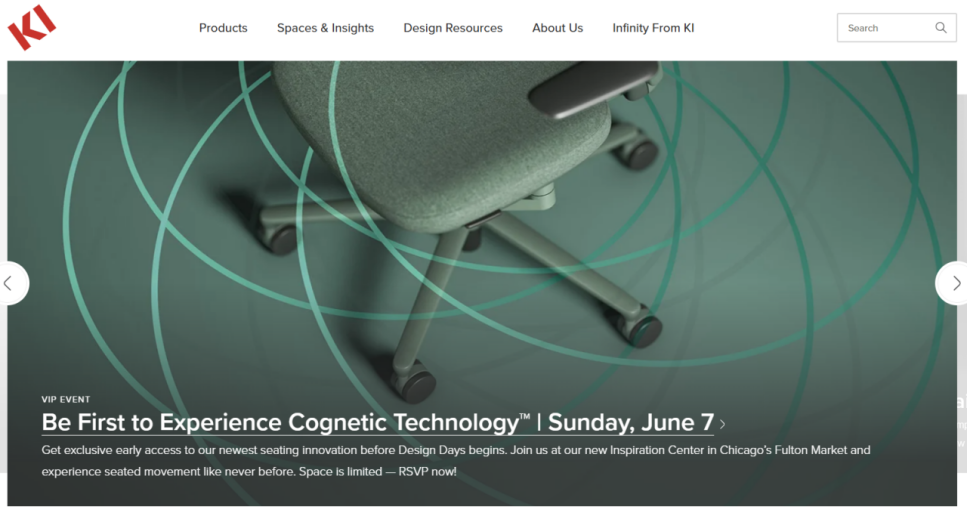
KI is a recognized leader in the North American market, known for its extensive experience with the General Services Administration (GSA). They specialize in furniture that supports the diverse administrative needs of government agencies.
Key Features:
- Procurement Ease: Established GSA contract schedules that simplify the buying process for federal and state entities.
- Sustainability Focus: Strong emphasis on recycled content and LEED-contributing materials.
Use Cases:
Recommended for federal administrative complexes and state-funded university auditoriums where standardized procurement is required.
4. Sedia Systems
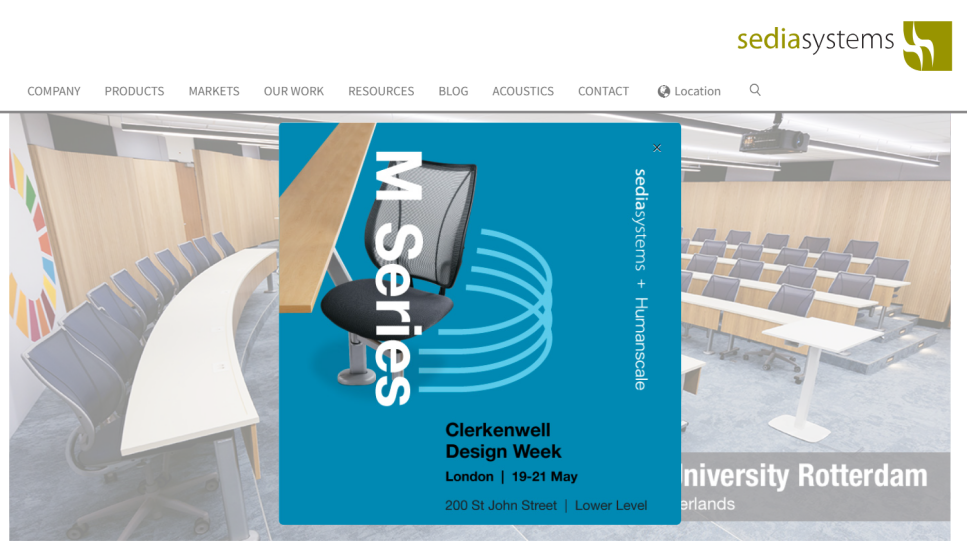
Sedia Systems is known for its minimalist, architecturally-driven approach. Their seating is often thin-profile and space-efficient, allowing for higher density without sacrificing the clean lines of modern government buildings.
Key Features:
- Space-Saving Design: Slim profiles that allow for increased capacity in smaller footprints.
- Integrated Technology: Options for writing tablets and power integration that blend seamlessly into the chair design.
Use Cases:
Best for modern city hall meeting rooms and government research auditoriums requiring a contemporary aesthetic.
5. Ferco Seating
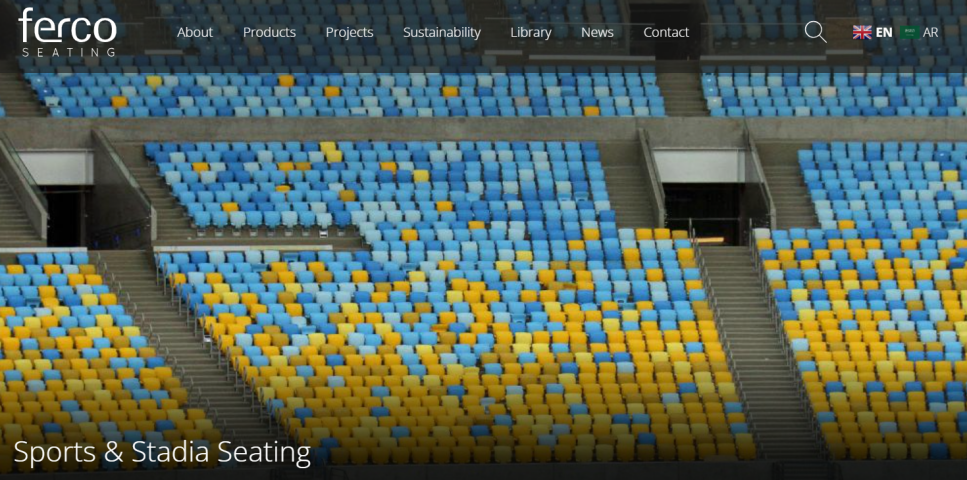
Ferco Seating focuses on ergonomic excellence and “VIP” comfort. They provide seating solutions that prioritize user posture, which is increasingly important for government venues that host long-duration hearings or performances.
Key Features:
- Ergonomic Engineering: Contoured backrests and lumbar support designed for prolonged seating comfort.
- Luxury Customization: A wide variety of high-end finishes, including leather and premium wood veneers.
Use Cases:
Suitable for premium government-funded theaters, international conference centers, and high-level council chambers.
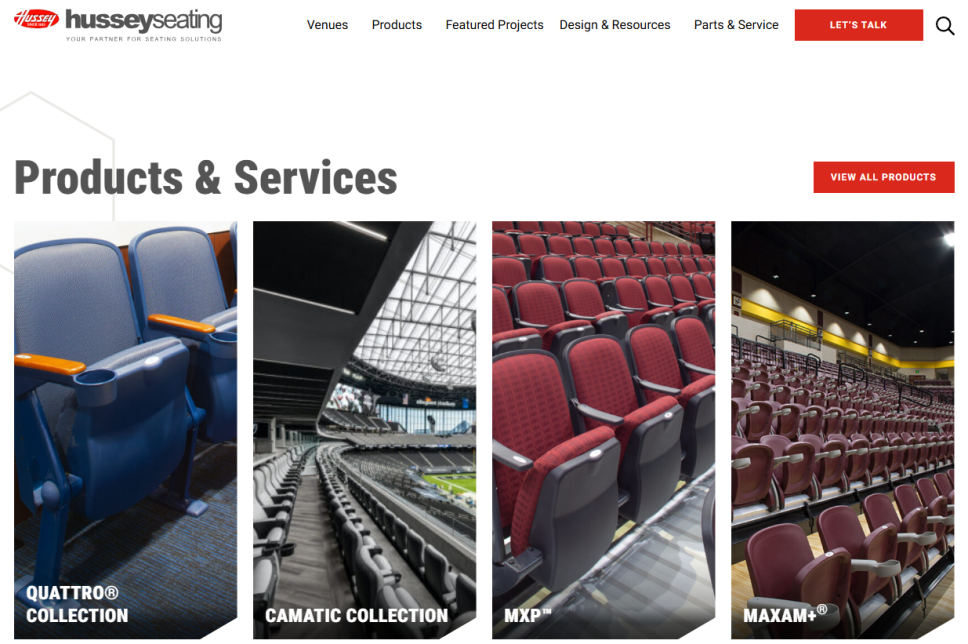
6. Hussey Seating
Hussey Seating is the global standard for flexible seating solutions. Their strength lies in telescopic platforms that allow a government hall to transform from a flat floor to a tiered auditorium in minutes.
Key Features:
- Retractable Platforms: Highly reliable automated systems for multi-use spaces.
- Modular Fixed Seating: Ability to coordinate fixed and retractable seating within the same venue for a unified look.
Use Cases:
Ideal for multi-purpose community centers and municipal athletic facilities that require layout flexibility.
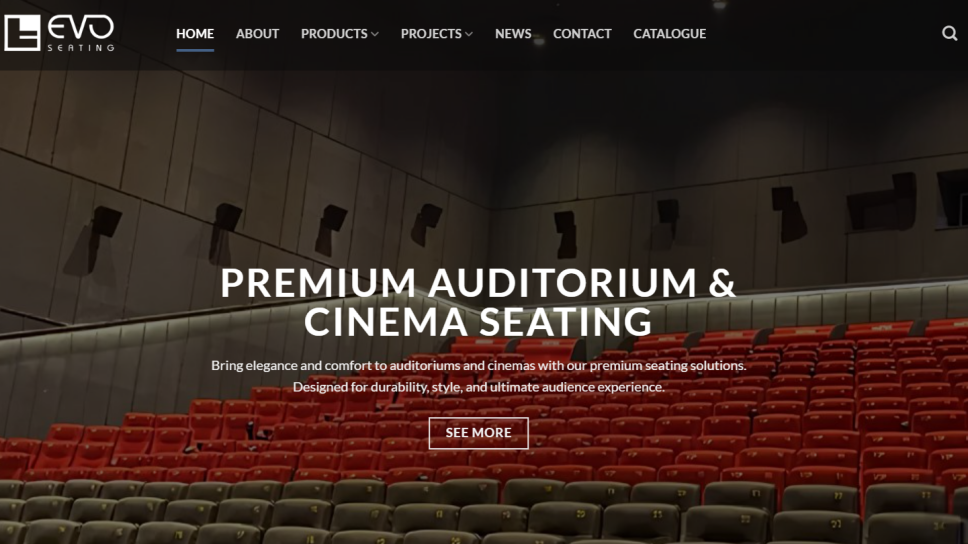
7. EVOSEATING
EVOSEATING focuses on the “modern look” of public seating, offering contemporary silhouettes and customizable upholstery options that appeal to new-age architectural projects.
Key Features:
- Contemporary Aesthetics: Bold designs that can be matched to modern branding and interior design.
- High Customization: Flexibility in selecting fabric types and color schemes for specific venue themes.
Use Cases:
Recommended for modern municipal arts centers and corporate-government hybrid venues.
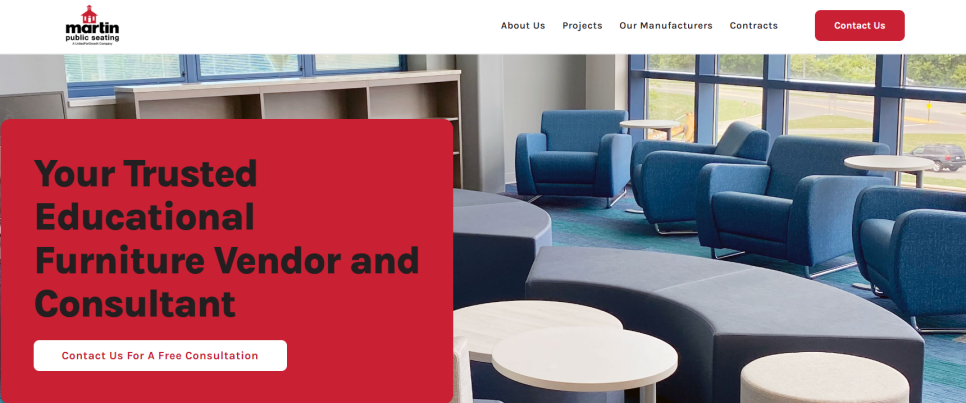
8. Martin Public Seating
Martin Public Seating operates with a strong focus on regional service and project management. They are experts at coordinating complex installations for school districts and municipal hubs.
Key Features:
- Service-Oriented Model: Strong localized support for installation and post-purchase maintenance.
- Institutional Durability: Products designed for the high-wear environments of public education and community centers.
Use Cases:
Best for regional government school boards and local town halls requiring a mix of auditorium and classroom seating.
9. Leadsun Seating
Leadsun Seating focuses on engineering for theater environments, emphasizing space optimization and functional durability. Their compact folding mechanisms are particularly useful for venues with limited depth.
Key Features:
- Compact Folding: Mechanisms designed to maximize row-to-row spacing while maintaining capacity.
- Cost-Effectiveness: Providing reliable engineering at a competitive price point for mid-range budgets.
Use Cases:
Suitable for municipal theaters and urban schools where space is at a premium.
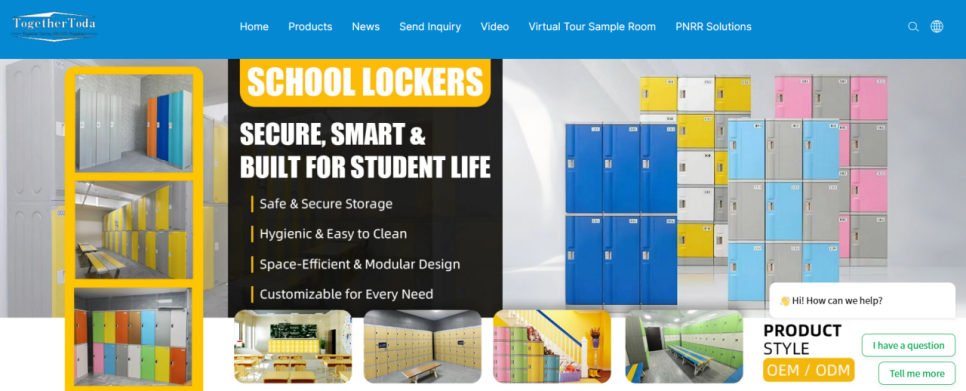
10. Toda Furniture
Toda Furniture specializes in ergonomic assembly and task seating. They focus on the physical health of the user, incorporating spinal support technology into fixed and mobile seating.
Key Features:
- Posture-Centric Design: Contoured shells and supports that encourage healthy sitting habits during long assemblies.
- Durable Construction: Use of high-impact plastics and metals suitable for public use.
Use Cases:
Ideal for public hearing rooms and legislative staff areas where individuals are seated for extended periods.
Selecting the most appropriate supplier from this diverse list requires an understanding of the specific operational and regulatory needs of the government project.
Buying Guide: Criteria for Government Procurement
When evaluating seating for a government auditorium project in 2026, procurement officers should utilize these four evaluation pillars:
- Compliance Documentation: Ensure the manufacturer can provide official test reports for BIFMA, ANSI, and local fire codes (e.g., CAL 133). In government projects, “compliance” is a non-negotiable legal requirement.
- Total Cost of Ownership (TCO): Shift the focus from the initial purchase price to the 20-year cost. This includes evaluating the length of the warranty and the ease of replacing modular parts like seat pads or armrests.
- In-House Manufacturing Capacity: Prioritize brands with vertical integration. Manufacturers who control their own production cycles are less vulnerable to market fluctuations and can guarantee consistent quality and delivery dates.
- Acoustic and Technical Integration: Seating accounts for a significant portion of a room’s sound absorption. Request NRC (Noise Reduction Coefficient) data and ensure the seating can accommodate modern power or translation hardware if required.
By applying these criteria, developers can ensure that the selected seating represents a responsible and effective use of public funds.
Final Verdict
The selection of a commercial seating provider for 2026 government projects depends on the specific “function” of the auditorium. For large-scale projects requiring high-volume manufacturing, vertical integration, and deep technical engineering, Leadcom Seating is the most reliable option for ensuring project stability and long-term durability.
For legislative environments where acoustic performance and premium aesthetics are the primary drivers, Skeie remains the market leader. Conversely, for projects requiring standardized procurement and high flexibility, KI and Hussey Seating offer the most robust logistical and technological solutions, respectively. Each brand on this list provides a specific path toward a successful and legally compliant public installation.
Frequently Asked Questions
Q1: Why is vertical integration important for government projects?
Vertical integration means the manufacturer produces its own parts. This reduces lead times and provides the government with a single point of accountability for quality and maintenance, which is essential for projects with strict deadlines.
Q2: What is the most common fire code for auditorium seating?
While codes vary by region, CAL 133 is the most common high-level standard for public assembly seating. It involves a full-scale burn test of the chair assembly to ensure it does not contribute to rapid fire spread.
Q3: Can these seats be integrated with technology?
Yes. Most leading manufacturers now offer integrated solutions for power outlets, USB charging, electronic voting systems, and translation equipment, often hidden within the armrest or seat back for a clean look.
