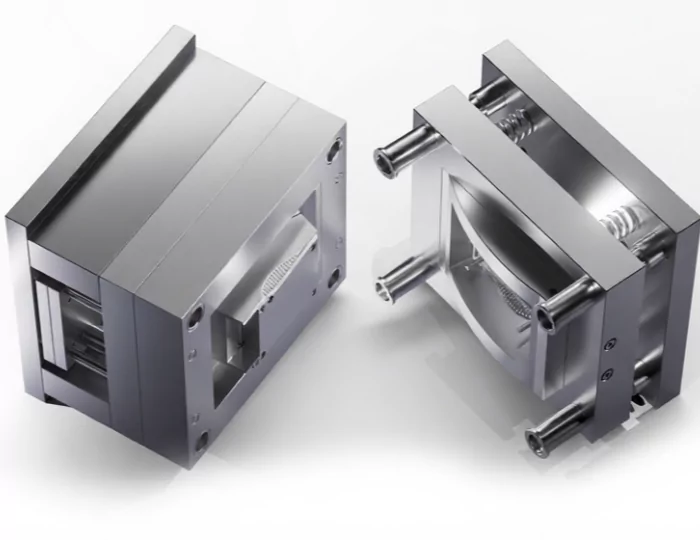
As the global transition toward sustainable energy accelerates, manufacturers are under increasing pressure to deliver components that meet both performance and scalability requirements. This article is intended for engineers, procurement specialists, and decision-makers in the energy sector who seek to understand how injection molding for energy industry applications supports modern product development. By working with an experienced new energy mold manufacturer, businesses can enhance efficiency while maintaining strict quality standards.
Expanding Applications Across New Energy Systems
Injection molding has become a critical manufacturing method in the new energy sector due to its ability to produce complex, high-performance components at scale. In electric vehicles (EVs), injection molding for energy industry solutions enables the production of battery housings, insulation parts, and charging system components. These parts must meet demanding requirements for thermal stability, electrical insulation, and structural integrity.
Energy storage systems (ESS) also rely heavily on injection molding. Components such as battery enclosures and thermal management structures require consistent dimensional accuracy to ensure safety and long-term reliability. A capable new energy mold manufacturer plays a vital role in maintaining these standards, especially in high-volume production environments.
Beyond EVs and storage, injection molding supports hydrogen fuel cells and renewable energy systems. From sensor housings to connector assemblies, injection molding for energy industry applications ensures that components can withstand harsh operating conditions while maintaining performance consistency.
Engineering Capabilities and Manufacturing Efficiency
The effectiveness of injection molding in the energy sector depends not only on technology but also on engineering expertise. Advanced simulation tools such as Moldflow allow engineers to predict material behavior, optimize mold design, and reduce potential defects before production begins. This approach strengthens injection molding for energy industry workflows and minimizes costly revisions.
Quality assurance is another critical factor. A reliable new energy mold manufacturer must implement rigorous inspection processes, including CMM measurement and material testing, to ensure compliance with industry standards. These practices are essential for meeting OEM requirements and avoiding downstream failures.
Livepoint Tooling has demonstrated strong capabilities in this field by combining engineering-driven design with high-volume manufacturing systems. Their integrated approach allows clients to scale production while maintaining consistent quality, which is crucial for new energy programs that demand both reliability and efficiency.
Enabling Scalable and Reliable Energy Solutions
The growing complexity of new energy systems requires manufacturing processes that can deliver both precision and scalability. Injection molding for energy industry applications provides a practical solution by enabling the efficient production of high-performance components. At the same time, working with a qualified new energy mold manufacturer ensures that these components meet strict safety and durability requirements.
For businesses looking to compete in the evolving energy market, the ability to integrate advanced manufacturing with engineering expertise is essential. By leveraging proven solutions from partners such as Livepoint Tooling, manufacturers can reduce risk, improve product performance, and achieve long-term operational success. For Injection Molding Applications in the New Energy Industry, aligning material selection, mold structure, and validation standards early helps reduce late design changes and supports safer scale-up for battery, charging, or energy storage applications. Livepoint Tooling can review manufacturability and repeatability before tooling is finalized, giving product teams a clearer path from prototype validation to stable production for injection Molding Applications in the New Energy Industry. For injection Molding Applications in the New Energy Industry, early planning should consider insulation, heat resistance, sealing reliability, flame retardancy, and long-term dimensional stability from the start of component development.
