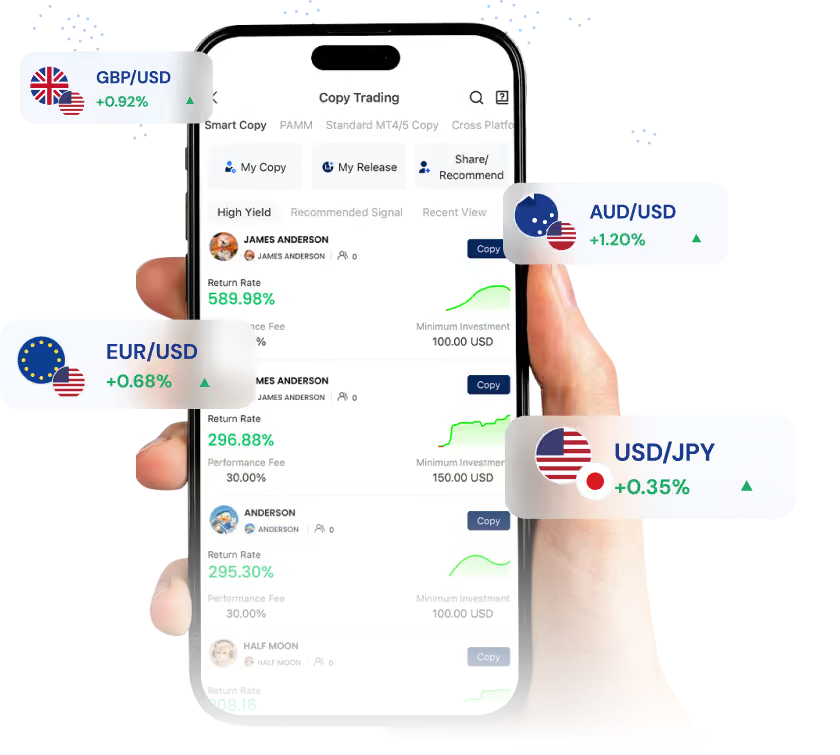
The foreign exchange market and global derivative asset classes present opportunities for wealth accumulation, yet navigating financial charts requires substantial technical skill and market expertise. For modern retail market participants seeking exposure without executing manual trades, utilizing a copy trading platform offers an structured point of entry. By automatically linking follower accounts to the trades of established signal providers, individuals can replicate positions seamlessly. However, participating in automated trading without understanding the operational mechanics, risk management principles, and regulatory dynamics can lead to premature capital loss. Starting responsibly requires a structured approach grounded in verification, risk control, and disciplined account management.
Understanding the Operational Framework of Copy Trading
Before funding an account, beginners must grasp how automated mirroring operates. Copy trading is an automated account management mechanism where trades executed by a master trader are mirrored proportionally in follower accounts in real time. This system handles position sizing, entry prices, stop-loss orders, and profit targets automatically based on pre-set parameters.
Platform infrastructure determines execution efficiency. When selecting a provider like GTCFX, users gain access to transparent network routing that synchronizes order execution between master and follower terminals. This synchronization helps reduce latency and minimizes slippage, which is the price gap between signal generation and order placement. A reliable copy trading platform provides real-time equity tracking and comprehensive trade logs, ensuring full visibility over allocated capital.
Verifying Legit Copy Trading Platforms
Security of funds and regulatory compliance are primary concerns for retail investors entering financial markets. With numerous online brokers marketing financial services, identifying legit copy trading platforms requires careful evaluation of legal structures and operational policies.
A legitimate financial broker operates under recognized regulatory oversight, providing segregation of client funds from operational bank accounts. For instance, entities operating within the GTCFX financial group maintain regulatory licenses across international jurisdictions, such as oversight from the Financial Sector Conduct Authority in South Africa and the Financial Services Commission in Mauritius. Licensing ensures adherence to strict capitalization rules, fair execution standards, and client account protection protocols.
Beyond regulatory credentials, legit copy trading platforms prioritize transparent performance reporting. They display complete historical trading logs, maximum drawdown figures, account longevity metrics, and true return calculations without hiding losses or manipulating data displays.
Step 1: Defining Personal Investment Objectives and Risk Boundaries
Responsibility in copy trading starts prior to choosing a trader to follow. Investors should begin by assessing their financial situation, overall investment goals, and individual risk tolerance.
Capital allocated to copy trading should always consist of risk capital—funds whose loss would not impair daily living standards or financial security. Beginners often make the mistake of setting unrealistically high profit expectations without considering the corresponding downside exposure required to achieve those gains. Defining an acceptable maximum loss threshold beforehand establishes clear emotional boundaries, preventing impulsive decisions during inevitable periods of market volatility.
Step 2: Evaluating and Selecting Master Traders
The profile directory of a copy trading platform presents vast amounts of statistical data. Selecting a strategy provider based strictly on short-term percentage gains is one of the most common pitfalls for newcomers. High returns often indicate aggressive leverage and high-risk strategies, such as grid trading or martingale systems, which double position sizes after losses to recover equity.
A disciplined evaluation requires examining multiple statistical parameters together:
Account Longevity and Historical Stability Strategies with a verified track record spanning six months or longer demonstrate adaptability across changing market conditions. Short-term performance spikes rarely translate to long-term consistency.
Maximum Drawdown Limits Maximum drawdown indicates the largest historical peak-to-trough decline in account equity. A strategy maintaining returns with drawdowns under twenty-five percent demonstrates structured risk management, whereas drawdowns exceeding fifty percent highlight severe vulnerability.
Asset Selection and Trade Frequencies Reviewing the trading history reveals whether the signal provider specializes in liquid major currency pairs, indices, or commodities, or whether they trade volatile exotic pairs. Consistent trading sizes and clear stop-loss placement indicate professional execution habits.
Evaluating these metrics on platforms like GTCFX allows investors to filter out high-risk speculative accounts in favor of consistent strategy managers.
Step 3: Setting Up Capital Allocation and Safety Parameters
Once a suitable strategy provider is identified, setting allocation parameters correctly safeguards the follower account. Beginners should avoid committing all available capital to a single master trader.
Risk mitigation relies heavily on capital diversification. Allocating funds across multiple traders using non-correlated trading styles, such as combining a conservative forex day trader with a swing trader focusing on precious metals, helps smooth the overall performance curve.
Furthermore, advanced allocation settings allow followers to maintain operational control. On GTCFX, users can customize copy ratios to adjust trade sizes proportionally to their account balance. Incorporating automated loss limits, such as equity stop-loss triggers that automatically disconnect follower accounts if total account value drops below a designated threshold, ensures capital protection remains active even when monitoring is offline.
Step 4: Ongoing Account Monitoring and Adaptive Portfolio Management
Passive execution does not imply passive oversight. Responsible copy trading demands regular review of account activity and portfolio performance.
Investors should monitor whether master traders adhere to their established strategies. If a signal provider abruptly increases position sizes, removes protective stop-loss orders, or dramatically shifts trading frequency to chase losses, followers should intervene promptly. Pausing automated copying, adjusting allocation ratios, or reallocating capital to alternative providers helps maintain alignment with personal risk targets.
Cultivating a Long-Term Perspective in Copy Trading
Sustained success on a copy trading platform depends on treating automated mirroring as a structured long-term strategy rather than a source of quick financial returns. By choosing regulated and legit copy trading platforms, thoroughly vetting signal providers through multi-metric analysis, enforcing strict loss controls, and retaining personal oversight through flexible platform tools on GTCFX, market participants build a solid foundation for navigating dynamic global markets effectively.
